Testing with the Goettfert Capillary Rheometer
How It's Used at DatapointLabs
The Göttfert Rheotester 1000 and Rheograph 2003 are high-pressure capillary rheometers. These instruments are used to determine the flow characteristics and viscosities of thermoplastic polymers and rubbers.
Common Applications
-
viscosity-shear rate data
-
extensional viscosity measurement (Cogswell or Moldflow scheme)
-
first normal stress difference (Gleissle scheme)
-
Bagley end-pressure loss correction
-
thermal stability
-
Mooney slip
-
slit die measurements
Operating Ranges Offered
| Pressure | 1 bar to 1000 bar |
|---|---|
| Shear rate | 0.1 to 175,000 /sec |
| Temperature | 25 to 500°C |
Testing Services
| R-014 | Cogswell Extensional Viscosity |
|---|---|
| R-015 | Thermal Flow Stability |
| R-017 | Binding Extensional Viscosity |
| R-032 | Static Die Swell/Sag by Laser Micrometry |
| R-035 | Slit-Die Rheology (1 Temperature, 1 Die) |
| R-011 | Capillary Rheology (1 Temperature) |
| R-018 | No-Flow Temperature |
| R-013 | Very High Shear Capillary Rheology (1 Temperature) |
| D-015 | Melt Density |
| R-012 | Capillary Rheology with Bagley Correction (1 Temperature) |
| R-016 | Mooney Slip |
| R-030 | Die Swell Measurements by Laser Micrometry |
| D-030 | Bulk Compressibility of Solid Pellets |
| D-032 | Foam Compressibility |
| R-042 | Peldom Elongational Viscosity |
| Z-995 | Bagged specimen return |
| R-033 | Capillary Viscosity with Back Pressure (D3 Testing) |
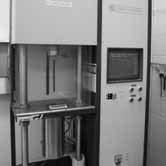
The Goettfert Capillary Rheometer at DatapointLabs
Get Started
-
Share your requirements
Tell us about the material, application, environment, and any method, standard, specimen, or conditioning constraints.
-
Confirm the approach
We’ll align the appropriate method, specimen requirements, and deliverables to your objectives, then provide a quote and test plan.
-
Submit your PO and materials
Send the purchase order and arrange delivery of materials or specimens so the program can move into scheduling and execution.
-
Receive your results
You’ll receive an engineering test report with digital data delivery, along with any agreed raw data or method-appropriate outputs.